
A local guide, not a listings directory
Property here comes with a relationship to the water.
Grand Lake is made up of distinct coves, communities and shorelines. The details that matter most can be less about a view from the porch and more about what comes with the property—and what needs to be checked.
This guide is an editorial starting point for buyers, owners and sellers. It is not legal, surveying, engineering, lending or insurance advice; verify the facts of a particular property with qualified professionals and the relevant authorities.
Start with the right expectation. Waterfront does not automatically mean private dock rights, year-round navigable water depth, unrestricted shoreline work or a dock permit that transfers automatically with a sale.
Looking for a place at Grand Lake?
Browse our featured property collection; listings and availability are confirmed with the advertiser.
A useful distinction
What makes Grand Lake property different?
A home’s relationship to the shoreline can shape how you use it, maintain it and investigate it. Ask what each description means for the specific parcel.
Waterfront homes
Direct shoreline setting can mean a closer connection to the water, but does not establish dock rights, water depth, shoreline ownership or permission to make improvements. Check the parcel, permits and current conditions.
Lake-view & off-water homes
These homes may sit near the lake or look toward it without occupying the shoreline. Some communities or properties may offer shared, deeded or other access; confirm the recorded and practical details rather than assuming.
Condominiums & townhomes
Shared buildings and common areas can change maintenance responsibilities and use rules. Review association documents, fees, rental policies, parking and exactly which amenities or lake facilities are included.
Lakefront lots & undeveloped land
Before planning a home or dock, understand the legal parcel, access, terrain, easements, utility availability, septic feasibility, drainage and any applicable GRDA or local requirements.
Full-time residences
For a year-round home, consider ordinary daily needs alongside lake access: utilities, road conditions, maintenance responsibilities and how the property functions outside peak recreation season.
Second homes
Part-time ownership brings its own questions: security, seasonal upkeep, insurance, utility management and whether a community or lender has rules about occupancy or short-term rentals.
Around the lake
Where to look around Grand Lake
Each part of the shoreline has its own pattern of towns, marinas, residential settings and services. These are orientation notes, not rankings or statements about current availability.
Grove & Honey Creek
Grove offers town services and residential neighborhoods, with boating and lake access around the area. Honey Creek is one of the lake’s familiar arms and a point of reference for nearby shoreline communities.
Explore the Grove guide →Monkey Island & Afton
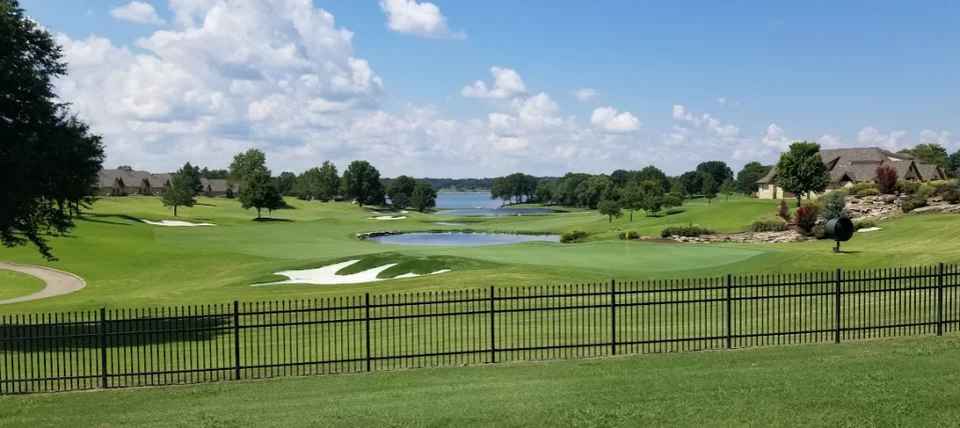
Resort amenities, golf, marinas, condominium options and lakefront properties shape this part of the lake. Check the details of each community and property, including access and shared facilities.
Explore Monkey Island →Duck Creek & South Grand Lake
Boating-oriented neighborhoods and marinas sit among communities including Ketchum, Cleora and Langley. Shoreline and access conditions vary from one location to another.
Explore South Grand Lake →Disney, Langley & Pensacola Dam
These communities combine local life, recreation and important lake infrastructure. Prospective owners should pay close attention to parcel boundaries, shoreline conditions and applicable permits.
Read the Disney area guide →Bernice & northern communities
Northern lake communities include quieter residential settings as well as places to access the water and nearby amenities. Evaluate each property on its own access, services and shoreline conditions.
Find local contractors →Before an offer—or a project
The Grand Lake waterfront checklist
Waterfront properties can involve boundaries, permissions and infrastructure that are not obvious during a showing. Use this as a conversation guide, then confirm property-specific facts with the relevant professionals and agencies.
- GRDA boundary and Taking Line: GRDA says the Taking Line is determined by a legal metes-and-bounds survey description—not by a particular elevation contour. Review the applicable description and survey; do not infer it from a water elevation.
- Flowage easements: An easement permits flooding of property under its terms. Read the recorded documents and abstract to understand what applies; restrictions and rights depend on those documents.
- Property survey: Have a qualified surveyor identify the parcel and relevant lines, easements or encroachments. This illustration is not a substitute for a survey.
- Dock permit and transfer: Check permit records and the GRDA transfer process. A dock permit does not automatically transfer with a real-estate closing.
- Dock condition & electrical: Review structure, flotation, anchors, lifts and electrical certification. On ownership change, GRDA requires a new Electrical Certification Form in the new owner's name.
- Water depth & boating access: Confirm water depth and the access that matters to your boat; do not assume navigable depth year-round.
- Shoreline & erosion: Ask about erosion and verify approvals before assuming any shoreline work is allowed.
- Flood risk & flood insurance: Check the address using FEMA’s official map service and discuss flood insurance with an insurance professional.
- Utilities & septic: Confirm water, wastewater, septic condition and capacity, electric service, internet availability and related inspections.
- HOA & rental rules: Review association documents and applicable occupancy or short-term rental requirements.
- Ongoing costs: Budget for property taxes, home and dock maintenance, insurance, utilities, association fees and other recurring ownership expenses.

A considered purchase
Buying property at Grand Lake
Look beyond the showing-day view. A useful due-diligence plan joins the home, parcel, shoreline and paperwork into one clear picture.
Choose local experience
Work with a real-estate professional familiar with the area and the kinds of property you are considering. Ask how they verify access, dock documents and community-specific details.
Plan financing early
Discuss whether the property will be a primary or second home with lenders before making assumptions about qualification, down payment or loan terms. Compare the actual loan estimates you receive.
Inspect the whole property
Arrange appropriate inspections for the house, roof, septic or wastewater system, utilities and any dock or lift. Waterfront structures and electrical systems deserve qualified attention.
Review title, survey & easements
Ask title and closing professionals about the abstract, legal description, recorded easements and survey needs. Documents—not informal assumptions—are the place to verify parcel details.
Document the dock
Request the current GRDA permit and related records, confirm the dock’s condition and understand transfer requirements, including the new Electrical Certification Form in the new owner's name, before closing.
Plan closing & ownership costs
Ask your lender and closing team for an itemized closing-cost estimate. Talk with an insurance professional about the specific home, flood exposure and dock, then budget for property taxes, maintenance, utilities, association obligations and seasonal care.
Preparing a clear picture
Selling a Grand Lake property
A strong property presentation makes the setting legible and the details easy to verify. Work with a local agent on positioning, timing and documentation for your particular home.
Prepare the home and shoreline
Address maintenance, tidy outdoor areas and make the condition of shoreline features clear. If a dock needs work, document its current state rather than implying approvals or condition that have not been confirmed.
Gather dock and property records
Organize available permits, transfer information, surveys, utility and septic records, easement documents and association information for review with your agent and closing professionals.
Describe access precisely
Present verified water access, dock features, boat access and shoreline information accurately. Avoid describing a permit, depth or improvement as guaranteed or transferable unless confirmed.
Make photographs do useful work
Show the home, setting and relevant property features clearly. A photo can set context, but it does not establish boundaries, water depth or legal access.
Seasonal activity can affect how a property is experienced and photographed, but no season guarantees a sale price or outcome. Discuss the right approach for your goals with a local professional.
From parcel to plans
Building at Grand Lake
A build begins with what the land can support, what approvals are needed and what services can reach the site. General guidance is no substitute for local permitting, surveying, engineering or legal advice.
Evaluate the parcel
Confirm access, topography, drainage, soil and the practical build area with qualified professionals. A view or shoreline location alone does not establish a usable building envelope.
Confirm boundaries & easements
Review the legal description, survey and recorded easements. For shoreline plans, verify GRDA requirements and property-specific conditions before designing improvements.
Investigate utilities
Establish availability and connection requirements for water, electric, wastewater or septic, communications and access roads. Have septic feasibility evaluated before relying on a site plan.
Coordinate local approvals
Check applicable county, municipal, association and GRDA requirements. Shoreline work, dock installation and other projects may involve separate approvals.
Build a lake-ready team
Choose contractors and design professionals who can explain their experience, scope, schedule, site access and coordination responsibilities for your particular property.
Plan drainage and site work
Discuss grading, runoff, erosion control, staging and access with qualified local professionals before construction begins.
Local professionals
People involved in a Grand Lake property decision
Title and closing, financing and insurance are part of the practical picture. The page sponsor is identified as such; paid placement provides visibility and is not an independent endorsement or ranking.

Page sponsor · Title & closing
Grand River Abstract & Title Co.
Since 1938 · 504 W. Krause, Jay, Oklahoma
Founded in 1938, Grand River Abstract provides title searches, closing and abstracting services in Northeast Oklahoma. The company describes a team of more than 30 real estate industry professionals serving buyers, sellers and lenders.
Its team works with local attorneys on transaction-specific questions, including GRDA regulations, flowage easements and restricted-land matters. Bring your abstract, survey and dock records so the closing team can identify the documents and professional reviews your purchase or sale needs.
(918) 253-4249 · (918) 238-1004 · grandriverabstract.com
Page sponsorship is paid visibility, not a ranking or independent editorial endorsement.
Mortgage lender
1st Capital Mortgage
Discuss lakefront financing, jumbo loans, first-time buyer programs and other home loan options with 1st Capital Mortgage. Ask which programs are currently offered for your property and how qualification, down payments and terms apply to your circumstances.
Phone: (918) 782-4994
Website: grandlakehomeloans.com
The website was unavailable when this guide was reviewed. Call to confirm current web details.
Mortgage lender
American Financial Network
Theresa Swift · NMLS 191901 · Grove, Oklahoma
Theresa Swift works with Grand Lake clients on conventional, FHA, VA, USDA, jumbo and specialty loan products. Ask about current program availability and suitability for your property and circumstances.
Phone: (918) 791-0438
Insurance agency
Webb Insurance Agency
A locally owned, family-run agency offering home, auto, farm, business and life insurance from multiple carriers. Ask about coverage for the specific property and any dock or waterfront features.
Phone: (918) 786-8787
Location: Grove, OK
Website: webbinsuranceagency.net
Insurance agency
TnT Insurance Group
Insurance options for lake houses, boats, docks, vehicles, golf carts, jewelry and more. Confirm current offerings and coverage details directly with the agency.
Phone: (918) 782-6595
Location: Ketchum, OK
Website: insurewithtnt.com
Primary sources & next steps
Helpful Grand Lake property links
GRDA property FAQs
Read GRDA’s answers about its property boundaries, Taking Line and easements.
Official GRDA FAQs →Permits & dock ownership
Find current permit information and confirm the transfer process, including a new Electrical Certification Form in the new owner's name.
GRDA permit applications →Flood map information
Search FEMA’s official map service for flood hazard information by address.
FEMA Map Service Center →Dock ownership guide
Explore permits, ownership transfers, inspections and practical dock care.
Grand Lake Dock Guide →Local services
Find area contractors and confirm project scope and credentials directly.
Current area contractors →Community guides
Get a closer look at Grove, Monkey Island, South Grand Lake and Disney.
Grove · Monkey Island · South Grand Lake · DisneyStraight answers, with the right sources
Grand Lake real estate FAQs
What should I know before buying waterfront property at Grand Lake?
Confirm the parcel and easements through the legal description, survey and recorded documents. Verify dock permits, transfer requirements—including the new Electrical Certification Form in the new owner's name—dock condition and electrical certification; investigate water depth, shoreline work, utilities, flood risk and insurance for the specific property. See the waterfront checklist and GRDA FAQs.
Can I build or modify a private boat dock?
Requirements depend on the property and proposed work. Check current GRDA rules and obtain required approval before installing, moving or significantly modifying a dock. Start with GRDA permit applications and the Grand Lake Dock Guide.
Does an existing dock permit automatically transfer?
No. A dock ownership change requires the GRDA transfer process, and GRDA requires a new Electrical Certification Form in the new owner's name. Contact GRDA to confirm the current process for the property.
What is a GRDA flowage easement?
A flowage easement permits flooding property under the terms of the easement. The recorded document and abstract determine the applicable terms; review them with qualified professionals rather than drawing legal conclusions from a general description.
How can I check flood risk?
Search the address in FEMA’s official Map Service Center, then discuss the property and coverage options with qualified local professionals and an insurance provider.
Are off-water properties available with lake access?
Some communities or individual properties may have shared, deeded or other lake access arrangements. The details are property-specific. Ask what access is included and verify it in the relevant documents and community rules.
What should I inspect before buying a lake house?
Arrange suitable inspections for the home, roof, utilities, septic or wastewater system, dock structure, lift and electrical systems. Review surveys, easements, permits, insurance needs, association rules and flood information for the individual property.
Where can I find homes currently advertised for sale?
Visit our featured Grand Lake homes for sale page. It is a curated property collection, not a comprehensive MLS feed or a guarantee of live availability; confirm details with the advertiser.
A thoughtful next step
Looking for a Place at Grand Lake?
Explore featured properties around Grand Lake, from waterfront homes to residential neighborhoods and lake-area getaways. Confirm current availability and details with each listing contact.
Explore Grand Lake Homes for Sale →
Keep up with local events, lake news and area updates. .